

Dr. Michelle Yuen
Specialist in Orthodontics
FCDSHK (Ortho), FHKAM (Dental Surgery)
BDSc (Melb), MOrth (HK)
M Orth RCSEd
Speaks English, Cantonese, Mandarin
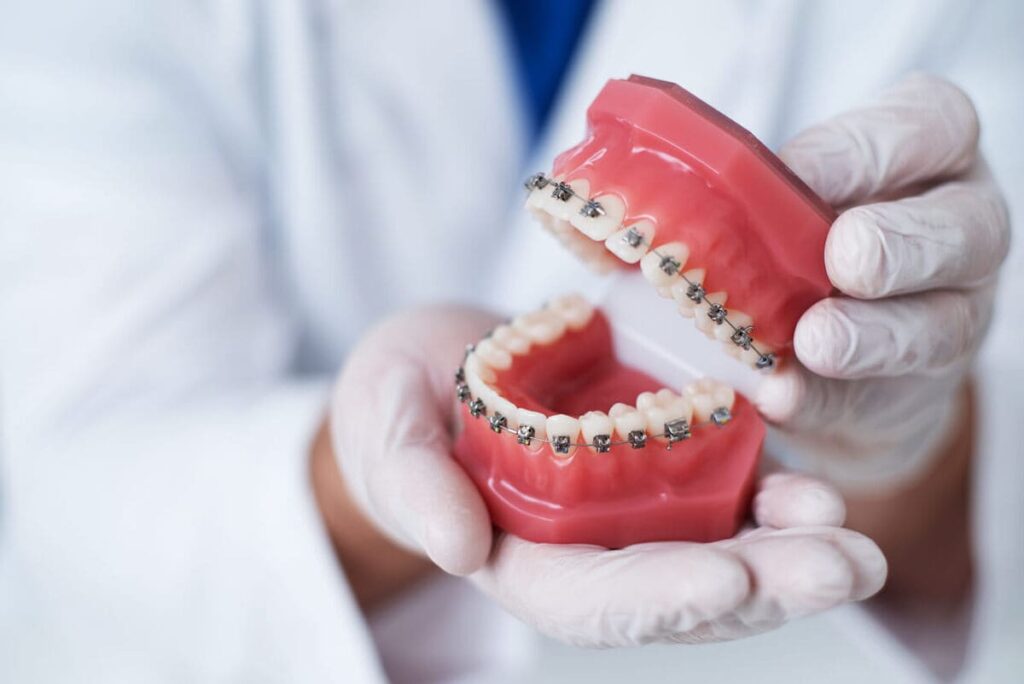
Braces (orthodontic treatment) gradually move crooked teeth into place and correct the bite, using fixed metal or ceramic braces or Invisalign clear aligners. Treatment with fixed braces takes at least 12–18 months, depending on the case, with adjustments usually every 4–6 weeks.
Our team includes orthodontists on the Dental Council of Hong Kong’s Specialist Register and speaks English, Cantonese, Mandarin and other languages.
Specialist in Orthodontics
FCDSHK (Ortho), FHKAM (Dental Surgery)
BDSc (Melb), MOrth (HK)
M Orth RCSEd
Speaks English, Cantonese, Mandarin

Specialist in Orthodontics
FCDSHK (Ortho), FHKAM (Dental Surgery)
BDS (Lond), LDS RCS (Eng)
M Orth RCSEd, MOrth (HK), AdvDipOrth (HK)
Speaks English, Cantonese, Mandarin
Braces straighten teeth, and straighter teeth are also easier to keep clean and healthy. Here are some common reasons people consider orthodontic treatment:
Improved Oral Hygiene: Crooked or misaligned teeth can make it difficult to clean effectively, leading to plaque buildup, cavities, and gum disease. Straightening your teeth enhances your ability to maintain good oral hygiene.
Better Bite Function: Misaligned teeth can cause uneven wear and tear, leading to issues like tooth sensitivity and jaw pain. Orthodontic treatment helps bring your bite into line, making chewing easier and reducing strain on the jaw.
Enhanced Aesthetics: Straighter teeth can make you more comfortable smiling, and teenagers and adults can both choose less noticeable braces.
Long-Term Benefits: Correcting misalignment early can help prevent more serious dental problems later and may reduce the need for future treatment.
Personalized Treatment Plans: At Bayside Dental Tung Chung, our orthodontists plan treatment around your teeth, bite and daily routine, and explain the expected timeline and fees before you start.
It’s worth booking an orthodontic assessment if you notice:
For children’s and teenagers’ treatment, see our Guide to Teen Orthodontics.
Fixed braces, often called traditional braces, are a common way to straighten teeth. The braces are attached to the teeth by square brackets which have a wire running through them.
The orthodontist adjusts this wire during each dental visit gradually moving the teeth into the correct position. There are two types of fixed braces, metal and ceramic braces.
Metal braces are made of high-grade stainless steel whereas the ceramic braces are of a translucent ceramic material. Both work the same way; ceramic braces are simply less noticeable.
Invisalign is a modern orthodontic treatment that uses a series of custom-made, clear aligners to straighten teeth. Unlike fixed braces, Invisalign aligners are removable, making them an aesthetic and comfortable option for patients who prefer not to wear traditional metal or ceramic braces.
The aligners are virtually invisible, easy to clean, and allow patients to eat and brush their teeth with ease. Invisalign is suitable for both adults and teenagers, offering a discreet way to correct crooked or misaligned teeth.
Aligners are worn at least 20 hours a day, usually 20–22 hours, with a new set about every 1–2 weeks.
Functional appliances help guide a patient’s facial growth and development. An orthodontist may recommend the use of functional appliances for patients whose jaw growth needs to be corrected in order to align the jaw properly before beginning the next phase in treatment.
Functional appliances suit children whose jaw bone and teeth are still developing. They can be fixed or removable, and the orthodontist chooses the design each patient needs.
Retainers are the final step in the orthodontic treatment process. Retainers are given to the patient after the braces are removed, patients are instructed to wear the retainers for a certain period in order to prevent the teeth from relapsing.
There are two types of retainers, fixed and removable. A fixed retainer is a thin wire bonded behind the upper or lower front teeth. A removable retainer is either a clear plastic retainer or a Hawley retainer, a wire held in place by an acrylic plate.
| Metal braces | Ceramic braces | Invisalign | |
|---|---|---|---|
| Appearance | Metal brackets and wire, more visible | Clear or tooth-coloured brackets, less noticeable | Clear aligners, hard to spot |
| Removable? | No; avoid very hard or sticky food | Same as metal | Yes, taken out to eat and brush; worn at least 20 hours a day, usually 20–22 |
| Adjustments | Wire adjusted every 4–6 weeks | Same as metal | New aligners every 1–2 weeks; check-ups every 6–8 weeks |
Our Orthodontists prefer for the patient to get a referral from a dentist. If you suspect that you may be in need for orthodontics then you are still welcome to book an appointment and discuss with our orthodontists.
The first visit usually takes around 30 minutes. Your orthodontist checks your teeth, bite and jaws, and explains which braces could work, how long treatment may take and the likely cost.
Next, we take X-rays, photos and impressions or scans of your teeth so the orthodontist can plan how they will move.
Bonding the brackets and fitting the wire takes about an hour. We show you how to clean around the braces and what to eat for the first few days.
After fitting, fixed braces are usually adjusted every 4–6 weeks, when the orthodontist adjusts or changes the wire and checks your progress.
Treatment with fixed braces takes at least 12–18 months, depending on the case. Once your teeth reach their planned positions, the braces come off and you are fitted with a retainer. Wear it as instructed, or your teeth may drift back.
There is no single price for braces. Cost depends mainly on the type of braces, whether one or both arches are treated, and how complex treatment is. These are reference ranges from the Prince Philip Dental Hospital’s fee schedule for private patients:
| Item | Reference range (HKD) |
|---|---|
| Examination / consultation | $600 – $2,500 |
| Orthodontic treatment plan | $2,000 – $3,000 |
| Fixed braces (single arch) | $35,000 – $50,000 |
| Retainer (per visit) | $1,500 – $2,500 |
These third-party figures are for reference only and do not represent our clinic’s own fees; your actual fee is confirmed after an examination. The ranges cover the basic treatment fee and may not include special materials or dental laboratory fees. For Invisalign reference fees, see our Invisalign page. For braces costs in more detail, see our Complete Guide to Braces; for other treatments, see our Dental Fee Reference.
Not sure whether you need braces, or which type would suit you? Start with a consultation. Booking is simple: use the buttons below to WhatsApp us, call or book online.
With fixed braces, treatment takes at least 12–18 months, depending on the case; for Invisalign timing, see our Invisalign page. Afterwards you wear a retainer to stop your teeth moving back.
After braces are fitted or adjusted, soreness usually lasts 3–4 days, then settles; soft food helps in the meantime. If soreness lasts longer than 3–4 days or gets worse, or a bracket or wire rubs your mouth, contact us.
Yes. There is no upper age limit, and adults with healthy teeth and gums can have orthodontic treatment, often with less noticeable ceramic braces or Invisalign.
With fixed braces, usually every 4–6 weeks for adjustments and progress checks. With Invisalign, you change aligners at home about every 1–2 weeks and visit every 6–8 weeks.
Your teeth can gradually shift back towards their original positions, undoing the results of treatment.
An orthodontist is a dentist with further specialist training in straightening teeth and correcting bites. In Hong Kong, orthodontists are listed on the Dental Council’s Specialist Register in Orthodontics, and our Tung Chung team includes registered orthodontic specialists.
No. A referral letter from your dentist is helpful, but you can book an orthodontic consultation directly by phone, WhatsApp or through our Contact Us page.
The first consultation usually takes around 30 minutes. Your orthodontist examines your teeth, bite and jaws, may take X-rays, and explains suitable options, treatment time and fees. The Prince Philip Dental Hospital lists HK$2,000–3,000 for an orthodontic treatment plan (for reference only, not our clinic’s actual fees; your fee is confirmed after an examination).