

Dr. Ming Hon Chim
Registered Dentist
BDS (HK), MFDS RCSEd, MFDS RCPS (Glasg)
Speaks English, Cantonese, Mandarin
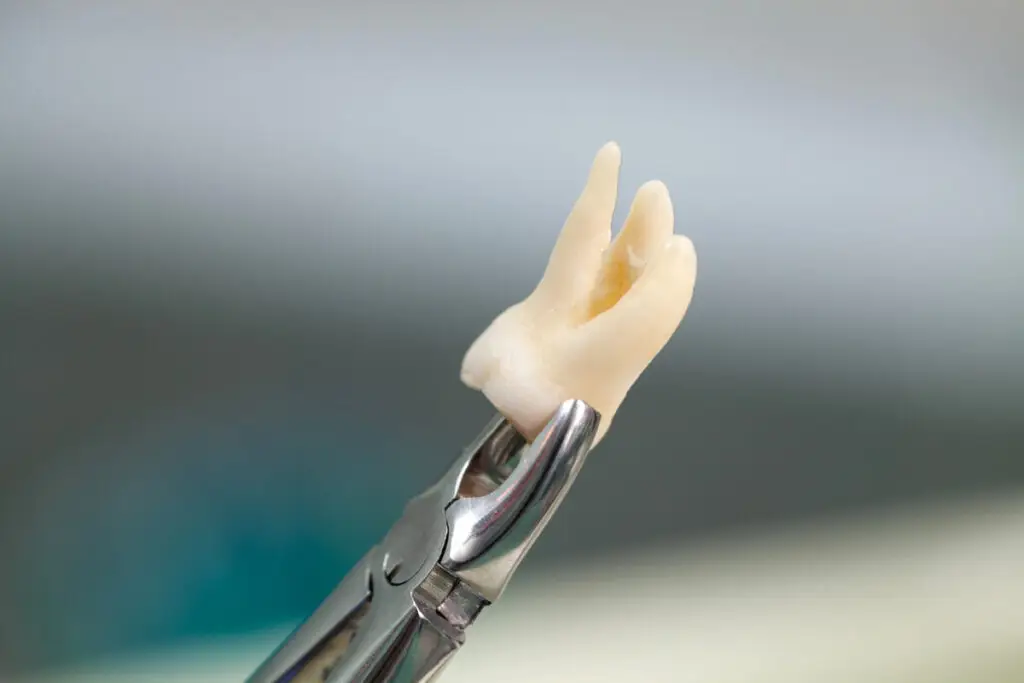
A tooth extraction removes a tooth that can’t be saved. At Bayside Dental Tung Chung, Hong Kong, we assess and remove teeth that are badly decayed, cracked or loose from gum disease, as well as impacted wisdom teeth. We take X-rays first, the extraction is done under local anaesthetic, and a simple extraction is usually completed in one visit.
Registered Dentist
BDS (HK), MFDS RCSEd, MFDS RCPS (Glasg)
Speaks English, Cantonese, Mandarin
Specialist in Paediatric Dentistry
FCDSHK (Paed Dent), FHKAM (Dental Surgery)
BDS (Rajiv Gandhi University of Health Sciences, India), MDS (Paed Dent) (HK)
MPaed Dent RCSEd, MPaed Dent RCS (Eng)
Speaks English, Hindi

Specialist in Periodontology
FCDSHK (Perio), FHKAM (Dental Surgery)
DMD (Philippines), MDS (Perio) (HK), AdvDipPeriodont (HK)
M Perio RCSEd
Speaks English, Tagalog, Cantonese, Mandarin

Registered Dentist
BDS (Maharashtra University of Health Sciences, India)
Speaks English, Hindi
Your dentist will first check whether the tooth can be saved, for example with root canal treatment or a crown. Extraction is recommended only when a tooth can’t be kept, or keeping it would harm other teeth. Common reasons:
Decay reaches the root, or infection can’t be treated with a root canal.
Teeth are too crowded, and some orthodontic plans need a tooth removed to make space.
Bone support is lost and the tooth is too loose to save.
The crack extends into the root and can’t be repaired.
Wisdom teeth that are impacted, hard to clean or repeatedly inflamed.
A baby tooth that hasn’t fallen out and is blocking the adult tooth.
Your own tooth is generally better than any replacement, so when the root and supporting bone allow, your dentist will look at saving it first, for example by clearing the infection with a root canal and protecting the tooth with a crown. If the tooth is cracked into the root, too decayed to restore, or has lost too much bone support, extraction followed by replacing the tooth is usually the better option. Your dentist will explain the pros, cons and expected cost of each after an examination.
| Simple extraction | Surgical extraction | |
|---|---|---|
| Used for | Fully erupted teeth with straightforward roots | Impacted wisdom teeth, roots broken below the gum, curved or fused roots |
| How it’s done | The tooth is loosened and lifted out under local anaesthetic | A small gum incision; a little bone may be removed or the tooth taken out in sections |
| Time | Usually about 10–20 minutes | Usually about 30–90 minutes, depending on complexity |
| Stitches | Usually not needed | Usually needed; dissolvable stitches usually dissolve within 7–10 days |
| Recovery | Usually 1–3 days | Usually about a week, with swelling peaking on days 2–3 |
The cost mainly depends on the tooth, whether a surgical extraction is needed, the root shape and whether sedation is used. The ranges below are from the Prince Philip Dental Hospital’s published fee schedule (third-party public information, for reference only, not our clinic’s fees):
| Item | Reference range (HKD) |
|---|---|
| Simple extraction | $700 – $2,000 |
| Wisdom tooth extraction (surgical or non-surgical) | $5,000 – $10,000 |
| Extraction of a baby tooth | $500 – $3,000 |
These are Prince Philip Dental Hospital reference fees, for reference only and not our clinic’s actual fees; your fee is confirmed after examination.
Your actual fee is confirmed after an examination and X-rays, and we explain the expected cost before any treatment starts. See our Dental Fee Reference page for more.
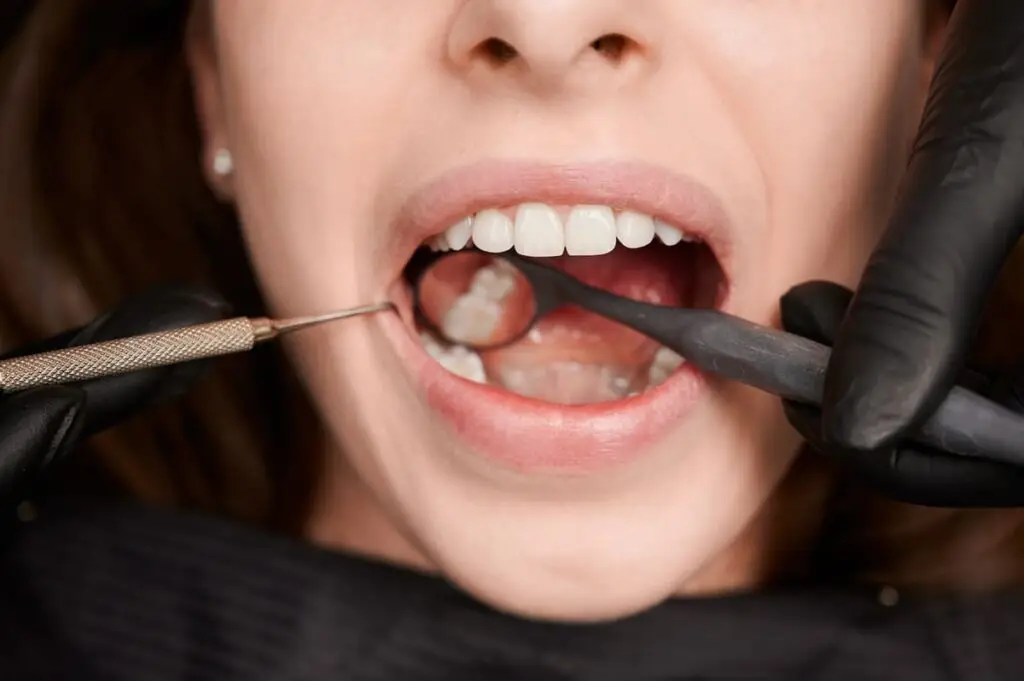
Wisdom teeth (third molars) usually come through between 17 and 25. If a wisdom tooth is impacted, growing at an angle or only partly through, it can trap food, keep getting inflamed or push against the neighbouring tooth, and your dentist will use X-rays to assess whether it should come out. For more complex cases, a 3D CBCT scan can show where the roots sit in relation to the nerve.
For timing, the surgery itself, costs and recovery, see our Complete Guide to Wisdom Teeth.
Number of Visits: usually 1 (surgical extractions may need a review or stitch removal)
Extraction Time: about 10–20 minutes for a simple extraction, 30–90 minutes for a surgical one
Recovery Period: 1–3 days for a simple extraction, about a week for a surgical one
We check the tooth, root and surrounding bone, confirm whether the tooth can be saved, and if extraction is needed, explain the approach and expected cost. Please tell us about any medication (such as blood thinners) and health conditions.
Local anaesthetic numbs the area completely, so you usually feel only pressure. For anxious patients or more complex cases, sedation can be arranged where appropriate: laughing gas is available in the clinic, and monitored anaesthesia is arranged by us at a sedation centre.
In a simple extraction the tooth is gently loosened and removed; in a surgical extraction a small incision is made, the tooth may be removed in sections, and the gum is closed with stitches.
You bite on gauze to stop the bleeding, and we go through aftercare, diet and pain relief, and book a review if needed.
What to eat: For the first day or two, choose soft, lukewarm foods such as congee, soup, steamed egg, tofu and yoghurt. Avoid very hot, spicy, hard or crumbly foods (nuts, crisps), chew on the other side, and avoid alcohol.
Dry socket: If the blood clot comes away too early and the bone is exposed, you may develop dry socket. It typically shows up 2–4 days after the extraction as pain that gets worse rather than better, often spreading towards the ear, with a bad taste. Smoking, straws and vigorous rinsing raise the risk.
Contact us promptly if: bleeding won’t stop, pain or swelling gets worse after day 3, you have a fever or pus, or numbness of the lip or tongue doesn’t wear off.
Wisdom teeth usually don’t need replacing. For other teeth, a gap can let the neighbouring teeth drift and the opposing tooth over-erupt, and can affect chewing, so replacing the tooth is usually worth considering. Options include dental implants, a bridge or a removable denture; if you’re planning an implant, your dentist will plan the timing before the extraction.
Baby teeth usually fall out on their own as the adult teeth come through. If a baby tooth is badly decayed and infected, broken in an accident, or still in place after the adult tooth has come through, your dentist may recommend removing it and will check whether space needs to be kept for the adult tooth. See Kids Dentistry.
If a tooth is badly decayed, cracked, or a wisdom tooth keeps flaring up, book a check-up. Your dentist will first see whether the tooth can be saved, then explain the extraction approach and the expected cost.
The extraction is done under local anaesthetic, so you usually feel pressure rather than sharp pain. Once it wears off, you may be sore for two or three days; pain relief as advised by your dentist helps, and sedation can be arranged for more complex cases.
A simple extraction usually takes about 10–20 minutes; a surgical extraction, such as an impacted wisdom tooth, usually takes about 30–90 minutes depending on the tooth and complexity.
Don’t eat until the anaesthetic has worn off, so you don’t bite your cheek. Stick to soft, lukewarm foods for the first day or two, then build up; most people are back to normal chewing in 1–2 weeks.
You can brush, but avoid the socket for the first 24 hours and don’t rinse, so the clot stays in place. After 24 hours, gentle warm salt-water rinses help keep it clean.
A little blood in your saliva is normal. Bite firmly on clean gauze over the socket for about 30–45 minutes; if bleeding continues, contact us.
It happens when the blood clot comes away too early and the bone is exposed, usually 2–4 days after the extraction, with worsening pain and a bad taste. Avoiding smoking, straws and vigorous rinsing helps prevent it; if you notice these signs, see us promptly.
Where possible, your dentist will try to save your own tooth, for example with a root canal and a crown. Extraction is recommended when the tooth is cracked into the root or too decayed to restore.
Wisdom teeth usually don’t need replacing. For other teeth, replacing the gap with an implant, bridge or denture is usually recommended to stop neighbouring teeth drifting and to protect your bite.
Non-urgent extractions are usually postponed until after the birth or planned for the second trimester, ideally around weeks 14–20. Urgent infection or severe pain will be managed as needed; please tell us how many weeks pregnant you are.
The Prince Philip Dental Hospital’s published range is HK$700–2,000 for a simple extraction and HK$5,000–10,000 for a wisdom tooth extraction (for reference only, not our clinic’s actual fees). Your actual fee is confirmed after an examination and X-rays; see our Dental Fee Reference.