
If you wince when you drink cold water, bite into ice cream, or breathe in cold air, you are not alone. Sensitive teeth are one of the most common dental complaints, and cold is the trigger people notice first. The good news: once you understand why it happens, most cases can be eased or prevented.
This guide explains what makes teeth sensitive to cold, how enamel wear, gum recession, cavities and grinding each play a part, and what you can do at home and in the dental chair.
Key Takeaways
- Cold sensitivity happens when the dentine beneath the enamel is exposed, letting cold reach the nerve through tiny tubules and cause a sharp, short-lived pain.
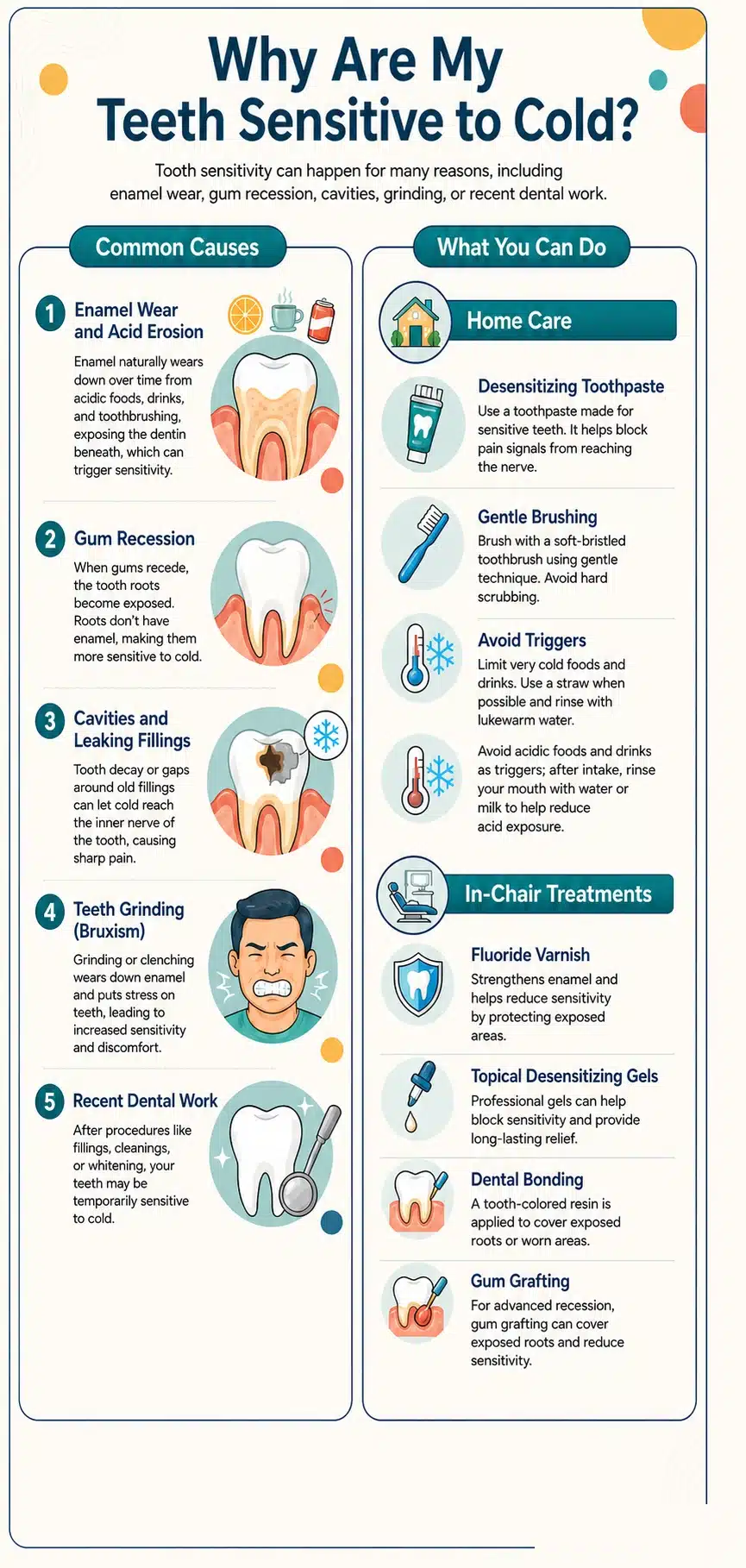
- The common causes are enamel wear and acid erosion, gum recession, cavities or leaking fillings, teeth grinding, and recent dental work.
- At-home care — a toothpaste for sensitive teeth, a soft-bristled brush and easing off acidic foods — usually eases symptoms over a few weeks.
- In-chair options depend on the cause and may include fluoride, bonding over exposed roots, an in-chair desensitising gel, gum treatment or replacing a worn filling.
- See a dentist if the pain is sharp on one tooth, lingers, or comes with swelling, pain on biting or visible gum recession.
What “Sensitive Teeth” Actually Means
A tooth becomes sensitive when the inner layer — dentine — is exposed or more easily stimulated. Dentine is full of microscopic tubules that lead directly to the nerve, so cold, hot, sweet or acidic things can set off a quick, sharp twinge.
The occasional mild twinge is common. But if the sensitivity is frequent, sharp, or lasts several seconds after the cold is gone, it is worth having a dentist find the cause.
Common Causes of Cold Sensitivity
Cold sensitivity usually has one of a few causes. Knowing which one you are dealing with points to the right fix — so understanding sensitive teeth causes is the first step.
1. Enamel Wear and Acid Erosion
Enamel shields the dentine underneath. Over time, acidic foods and drinks (soft drinks, citrus, wine), acid reflux, or frequent vomiting can soften and thin it, letting cold reach the dentine. Brushing too hard, or using a hard-bristled brush, wears enamel along the gum line as well — often on the outer surface of the front teeth.
2. Gum Recession
When gums recede, they expose the root surface, which has no protective enamel and is made of dentine. That makes it far more reactive to cold, brushing and even touch. Recession can come from aggressive brushing, gum disease, genetics or grinding — which is why many people with cold sensitivity also notice their gums have changed.
3. Cavities and Leaking Fillings
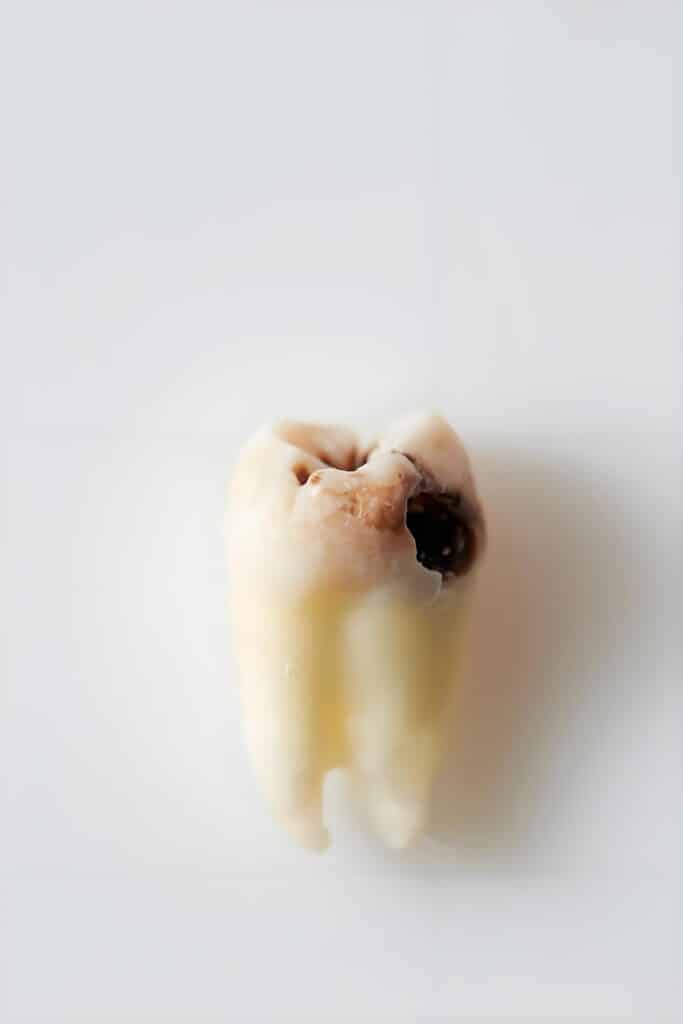
A cavity that reaches near the nerve can trigger sharp, pinpoint pain with cold. Old or cracked fillings can also let cold seep into the tooth. Because decay can progress quickly, any new or worsening sensitivity on a single tooth should be checked.
4. Teeth Grinding and Clenching
Grinding or clenching — often at night — wears enamel, opens tiny cracks and loads the tooth, all of which sharpen its response to cold. Flattened or chipped edges, worn biting surfaces and jaw soreness are common signs that grinding is part of the picture.
5. Recent Dental Work
Some sensitivity after a filling, crown or cleaning is normal, especially with deeper fillings near the nerve, and it usually settles within days to a few weeks. If it lingers, worsens, or spreads to several teeth, the cause is worth reassessing.
When to See a Dentist
Book a check-up sooner rather than later if you have:
- Persistent or worsening cold sensitivity that does not settle after a few days.
- Sharp pain when biting or pressing on one tooth — which may point to a cavity, crack or infection.
- Swelling, gum pain, or a bad taste, which can signal decay or an abscess.
- Visible gum recession, or flat, worn, chipped teeth that may be linked to grinding.
A dentist can examine the teeth, take X-rays if needed, and work out whether the cause is enamel wear, gum recession, a cavity, a crack or something else — so the treatment targets the real problem, not just the symptom.
How to Ease Sensitive Teeth at Home
For milder cases, dentists often suggest starting here:
- Use a toothpaste for sensitive teeth twice a day. Ingredients such as potassium nitrate or stannous fluoride help calm the nerve response over time. It can take a few days to several weeks to feel the full benefit, so consistency matters.
- Switch to a soft-bristled brush and use gentle, circular strokes instead of hard scrubbing.
- Ease off very acidic foods and drinks, or rinse with water or milk afterwards.
- Limit sugary and acidic snacking, which feeds both decay and erosion.
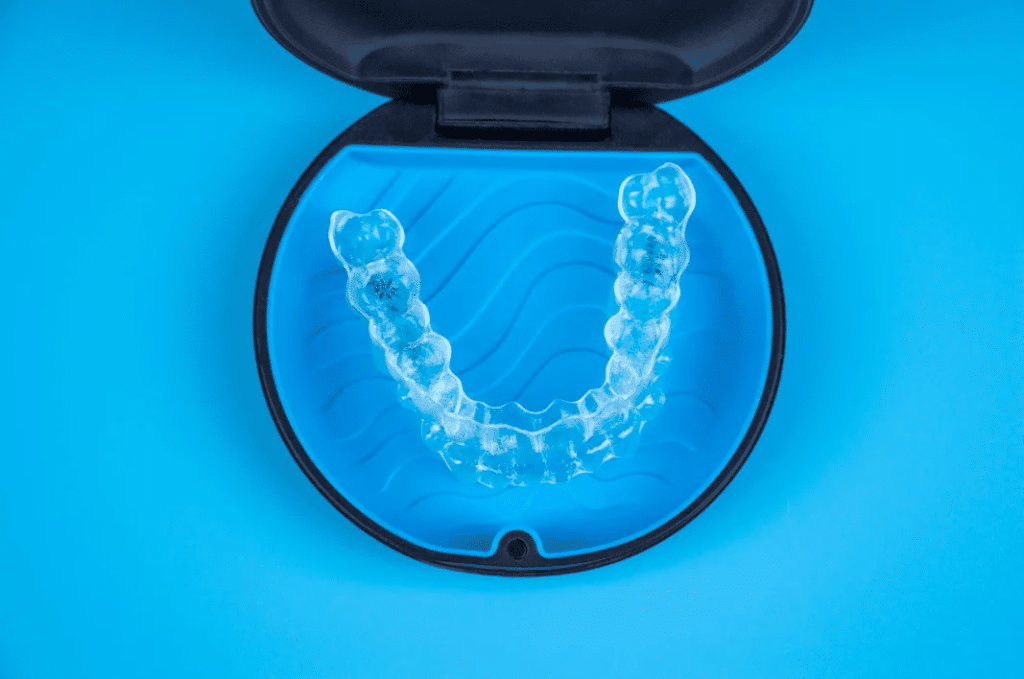
- Wear a night guard if you grind or clench. It slows enamel wear and protects the jaw.
In-Chair Treatments That Can Help
If home care is not enough, several sensitive teeth treatment options can give faster relief. Which one suits you depends on the cause, so a dentist will recommend based on what they find:
- Fluoride application — a varnish or high-strength fluoride is painted onto the teeth or exposed roots to strengthen enamel and blunt the cold response.
- Bonding or sealants over exposed roots — where gums have receded, a thin layer of bonding resin can cover the sensitive area and be colour-matched to the tooth.
- In-chair desensitising gel — a gel applied directly to the sensitive spots to seal the dentine tubules or calm the nerve, often giving quicker relief than toothpaste alone.
- Gum treatment or grafting — where recession is significant, gum procedures can cover exposed roots and reduce sensitivity.
- Adjusting or replacing a filling — if an old or cracked filling is letting cold in, a new, well-sealed restoration solves it.
Fee Reference
Costs vary with the cause, the number of teeth involved and the treatment chosen, so a fee is confirmed only after an examination. As a general reference, the ranges below are drawn from the published Schedule of Fees for Private Patients of Prince Philip Dental Hospital (PPDH) — these are a public reference, not our clinic’s prices.
| Related procedure (reference) | Published fee range (HKD) |
|---|---|
| Examination / consultation | $600 – $2,500 |
| Fluoride application (per tooth) | $500 – $700 |
| Filling / restoration | from $600 |
| Non-surgical periodontal (gum) therapy, per quadrant | $3,000 – $8,000 |
| X-ray (periapical / bite-wing) | from $180 |
Your own treatment plan and fee are confirmed after a dentist has examined the cause of your sensitivity.
Bayside Dental Tung Chung | Same-Day Appointments Available
If cold sensitivity is getting in the way of your day, our team in Tung Chung can examine the cause, explain your options clearly, and tailor care to your teeth — with a focus on precise, comfortable treatment for every patient.
- WhatsApp: +852 5915 5118
- Phone: +852 2185 6550
- Book online: same-day appointments where available.
Related Reading
- A cavity is a common cause of sudden cold sensitivity — see our complete guide to cavities.
- If an old filling may be leaking, our tooth fillings guide explains the options.
- Gum recession often drives sensitivity — read understanding periodontal disease and how to treat gum swelling and pain.
- Keeping gums healthy starts with cleaning — see our complete guide to teeth cleaning.
Frequently Asked Questions
1. Why are my teeth suddenly sensitive to cold? A sudden change usually means dentine has become exposed or stimulated — most often through enamel wear, gum recession, a new cavity, a leaking filling, or grinding. A single tooth that reacts sharply is worth checking promptly.
2. Does cold sensitivity go away on its own? Mild sensitivity after a cleaning or a new filling often settles within days to a few weeks. Sensitivity from decay, a crack or receding gums will not resolve by itself and needs a dentist’s attention.
3. What is the best toothpaste for sensitive teeth? Look for a toothpaste for sensitive teeth containing potassium nitrate or stannous fluoride, and use it twice daily. Give it a few weeks — these work gradually rather than instantly.
4. Can a cavity cause cold sensitivity? Yes. A cavity that reaches close to the nerve is a common cause of sharp, pinpoint cold pain. Because decay spreads, it is best not to wait.
5. Is it normal for a tooth to be sensitive after a filling? Some sensitivity is normal, particularly with deeper fillings, and usually eases within a few weeks. If it worsens or persists, ask your dentist to reassess the bite and the filling.
6. When should I see a dentist about sensitive teeth? See a dentist if the pain is sharp on one tooth, lingers, or comes with swelling, pain on biting, or visible gum recession — these can point to decay, a crack or gum disease.
7. Can teeth whitening make my teeth sensitive? Whitening can cause temporary sensitivity that typically fades within a few days. Using a desensitising toothpaste before and after, and following your dentist’s guidance, helps keep it comfortable.
All clinical information in this article is provided and reviewed by the registered dentists at Bayside Dental Tung Chung.
This article is for general information only and is not a substitute for professional dental advice, diagnosis or treatment. Please consult a registered dentist about your own situation.