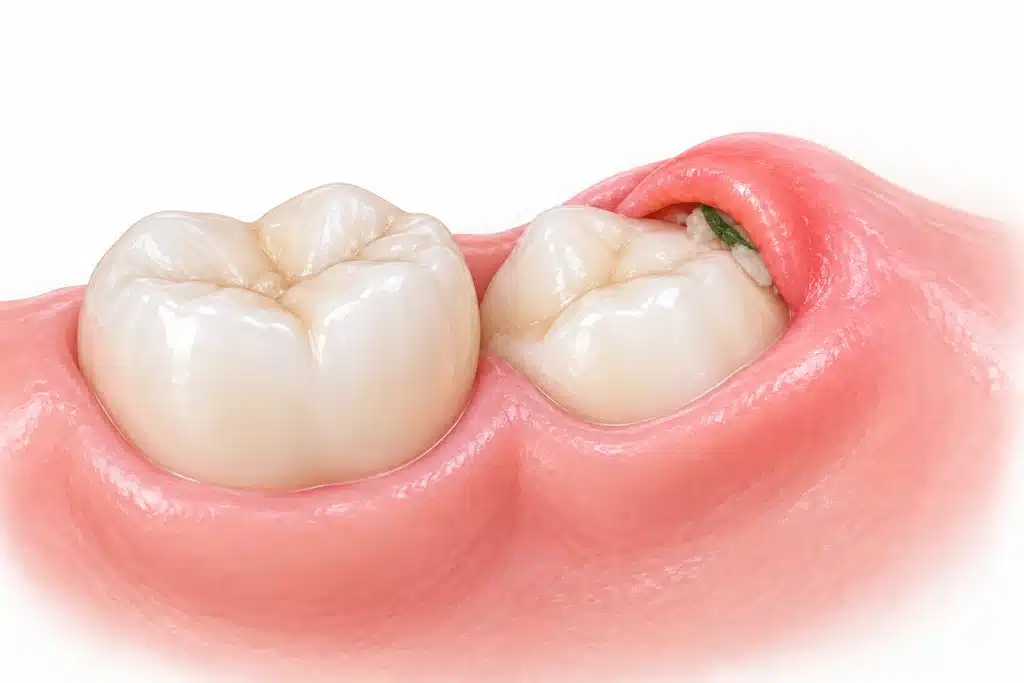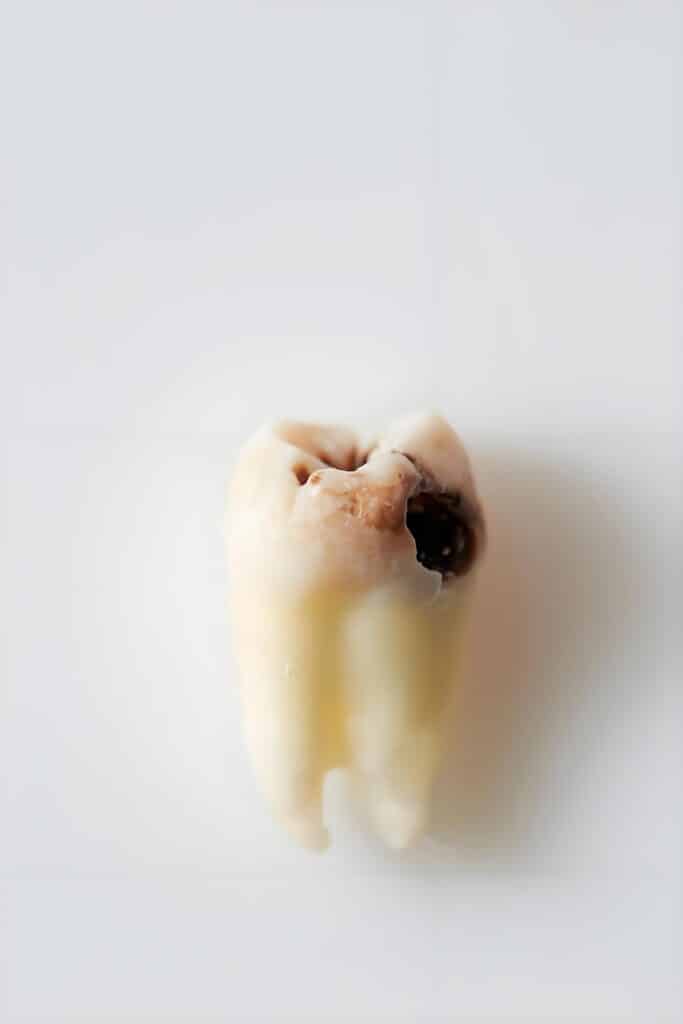
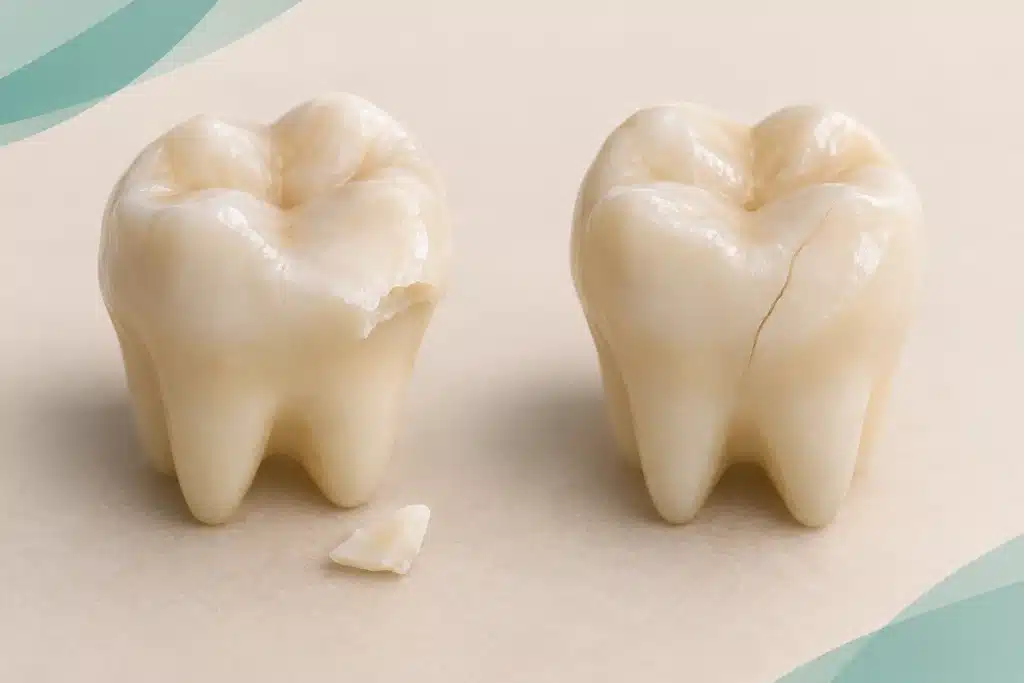
Image: illustration, not a clinical image.
A chipped or cracked tooth needs a dental assessment, even if it does not hurt. Avoid chewing on the affected side and keep any tooth fragment in a container of milk to take to your dentist. Treatment depends on the damage, remaining tooth structure and pulp health; a filling is only one possible option.
Is a chip different from a crack?
A chip leaves a visible piece missing. A crack may run through a tooth without a fragment breaking away, and the two can occur together. The visible size of a defect does not reliably show how deep it extends.
Hard foods, an injury, decay or weakened tooth structure around a large restoration may contribute to damage. A lost filling can also leave a gap that looks like a broken tooth. Your dentist needs to distinguish between these possibilities.
Pain on biting or sensitivity to hot and cold can be useful clues, but they do not prove that a tooth is cracked. Other dental conditions can cause similar symptoms.
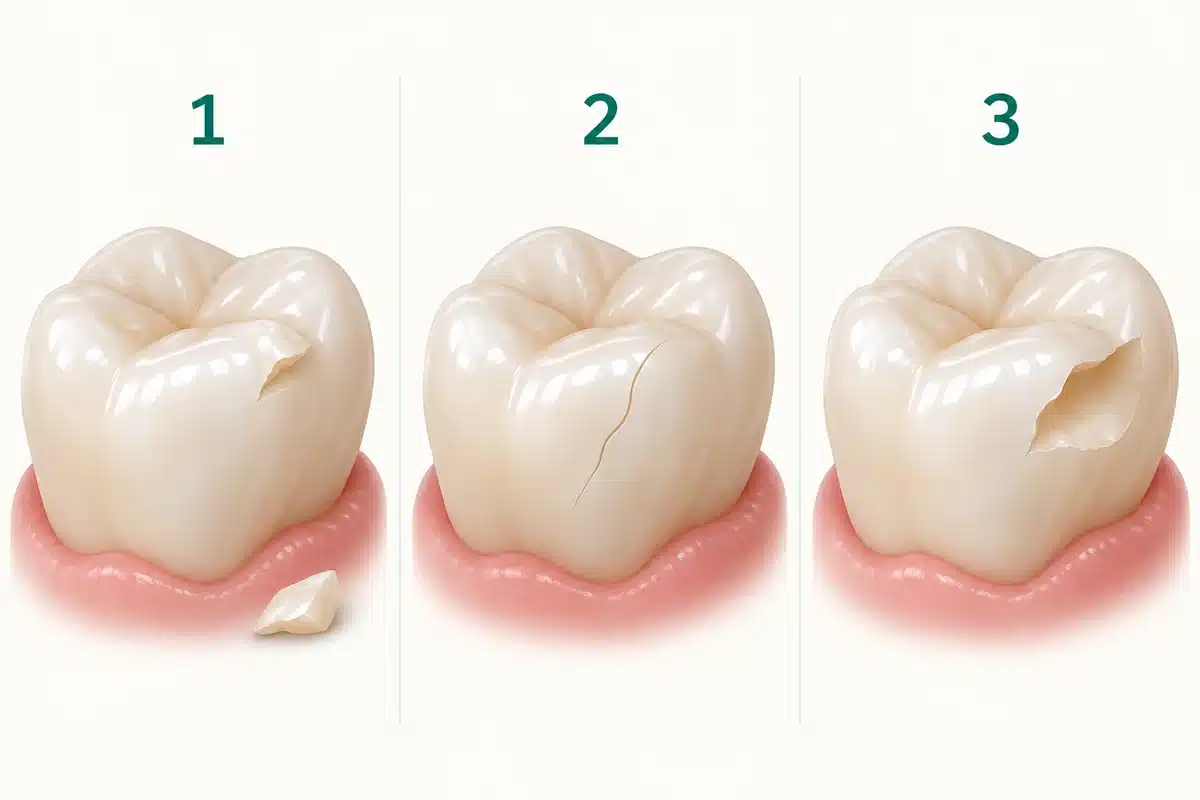
- Small chip
- Visible crack
- Larger missing portion
1 A small chip and fragment; 2 a visible surface crack; 3 a larger missing portion. Illustrations, not stages or severity grades. Appearance cannot establish crack depth or the treatment needed.
What to do before your appointment
- Contact a dentist. Explain when it happened, whether there was an injury, and whether you have pain, swelling, bleeding or a loose tooth.
- Keep the fragment. Put a broken piece of natural tooth in milk and take it with you. Reattachment is possible in some cases, but cannot be assumed.
- Reduce pressure. Choose softer foods and avoid chewing on that side. Do not keep biting down to test the damage.
- Clean gently. Brush carefully. Do not probe the gap with sharp objects, file the tooth or use household glue. Use pain medicine only according to its label and a pharmacist’s advice.
These measures concern a tooth that is still in the mouth. A completely knocked-out tooth requires different urgent advice. Contact a dentist immediately, and do not put a knocked-out baby tooth back into its socket.
When is it urgent?
A small, painless chip still needs an appointment. Tell the practice if a sharp edge is injuring your tongue or cheek, or if you have sensitivity or pain when chewing.
Severe or persistent pain, swelling, a loose tooth or a significant injury calls for prompt dental advice. Difficulty breathing or swallowing, heavy bleeding that will not stop, or a serious facial injury requires emergency medical care. In Hong Kong, call 999 if emergency assistance is needed.
An absence of pain does not establish that the pulp is healthy. Pain does not automatically mean that extraction is necessary either.
Can the tooth be repaired with a filling?
Your dentist assesses the damaged area, bite, remaining tooth and pulp response, with imaging where needed. Treatment is based on the examination findings; appearance alone is not enough to decide what is appropriate.
| Findings after assessment | Options that may be considered |
|---|---|
| A very small chip or sharp edge | Smoothing, polishing or repair, depending on the location and symptoms |
| A repairable defect with adequate healthy structure | Reattaching a suitable fragment or a tooth-coloured filling |
| More extensive loss of tooth structure | A crown or another suitable restoration |
| Pulp involvement | Assessment for root canal treatment and subsequent restoration |
| Damage that prevents the tooth being retained | Extraction and discussion of replacement options |
For a broader explanation of materials and procedures, read our tooth fillings guide. Repairing a visible chip and treating a deep crack are different clinical decisions.
Questions to ask at the assessment
Bring a record of when the problem began and whether pain occurs when biting, releasing your bite, drinking something hot or cold, or without a trigger. Mention previous fillings, crowns or root canal treatment on that tooth.
Ask what the examination has established, what remains uncertain, and whether enough tooth structure is available for the proposed repair. Check whether the estimate includes imaging, a temporary restoration and any later crown. The limitations of each option matter as well as the initial cost.
Can I wait if it does not hurt? What should I tell the clinic?
A lack of pain does not establish that damage is superficial. Contact the clinic and explain whether it followed an impact, biting something hard or no obvious incident. Ask how urgently you should be seen based on your symptoms and available appointments, rather than choosing a supposedly safe number of days to wait.
Useful details include:
- Which tooth is affected, when it happened and whether you can bite normally.
- Whether discomfort is brief sensitivity, pain on biting or persistent pain without a trigger.
- Any swelling, bleeding, looseness, sharp edges or recovered fragment.
- Previous fillings, a crown or root canal treatment on that tooth.
Do not delay seeking advice because you cannot find the fragment. If the clinic is closed, check its recorded message or official contact instructions. The emergency warning signs described above require urgent medical help.
Why is repairing a chip not always just a small filling?
The visible gap is only part of the assessment. A restoration also depends on the strength of the remaining tooth and whether the pulp is affected. A small chip, extensive break and crack extending towards the root may require different decisions.
A filling may be considered in one case and a crown in another. Root canal treatment is assessed when the pulp is involved; it is not an automatic consequence of every chip. Equally, having an old filling does not by itself establish that the tooth cannot be retained. Ask what damage has been confirmed, what remains uncertain and what limits each option has.
What determines the cost and number of appointments?
There is no single price for every chipped tooth. Check whether an estimate is for reattaching a fragment, a composite filling, temporary treatment, a crown or a plan that also includes root canal treatment. These are different scopes of care.
Ask for examination and imaging, treatment at the first visit, later restoration and reviews to be identified separately. Clarify whether the first visit is mainly for assessment or may include treatment, how many visits are expected and how to eat and clean the area while waiting for further care. Do not assume that more extensive treatment can be completed in one visit.
If you have insurance, ask your insurer which diagnosis, estimate and receipt documents it requires. Coverage and reimbursement must be confirmed by the insurer.
Reducing the chance of further damage
Avoid biting ice, hard sweets, bones and hard shells, and watch for small bone fragments in food. Tell your dentist about repeated breakages, grinding, clenching or an uncomfortable bite so that ongoing loading can be assessed. Attend the recommended reviews after repair rather than waiting for another painful episode.
Frequently Asked Questions About Chipped and Cracked Teeth
Can a cracked tooth heal on its own?
Broken tooth structure does not grow back through waiting. A dentist assesses the crack and the tooth’s condition before recommending treatment. Superficial enamel lines and deeper cracks do not all need the same approach.
Can a chipped tooth be repaired with a filling?
Some chips can be repaired with composite resin or by reattaching a suitable fragment. Larger defects or pulp involvement may need a crown, root canal treatment or another approach. Examination determines which options are appropriate.
Is it okay to leave a slightly chipped tooth?
Arrange a dental assessment even if the chip is small and painless. Appearance alone cannot establish the depth of damage. Avoid hard foods on that side and explain any injury, sensitivity or looseness when booking.
Can you fix a chipped tooth without going to the dentist?
Home measures can reduce pressure on the tooth while you arrange care, but they cannot establish the depth of a crack or provide a definitive repair. Do not file the tooth or use household glue.
Can I wait several days if the chip does not hurt?
Pain alone cannot establish how long it is safe to wait. Contact the clinic with the injury history and any swelling or looseness so it can help arrange assessment. Seek immediate help for emergency warning signs.
Can a tooth be repaired if I cannot find the fragment?
A missing fragment does not rule out repair. The dentist can assess fillings, crowns or other care according to the damage, remaining tooth and pulp health.
How much will repair cost, and can it be done in one visit?
That depends on whether you need a filling, crown or additional treatment. Ask for an individual estimate, its included items and expected visits after assessment; the visible size of a chip is not enough to confirm them.
Dental assessment in Tung Chung
Contact Bayside Dental Tung Chung about dental filling services and explain your symptoms when requesting an appointment. The practice is at Caribbean Square; appointment availability and treatment requirements need confirmation with the practice.
This article provides general oral health information and does not replace an individual dental assessment.