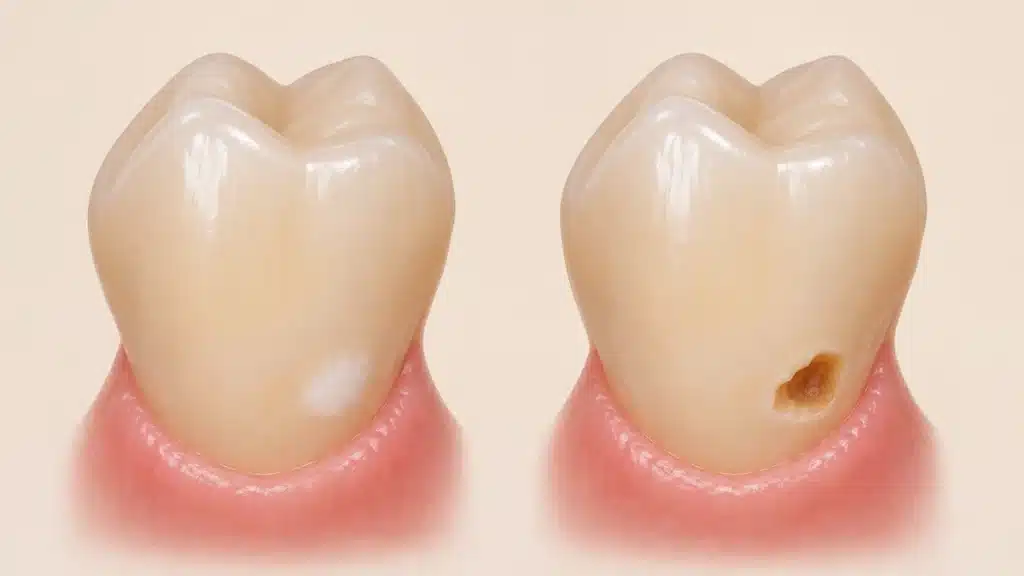
Some early tooth decay can stop or improve while the enamel surface is still intact. Fluoride and better plaque control can help replace lost minerals. A white spot can have several causes. If a cavity has formed, the lost tooth structure cannot grow back, and a dentist can check whether a filling is needed.
Are White Spots a Sign of Early Tooth Decay?
An early decay spot may look chalky or opaque. Bacteria in plaque use sugars in food and drinks to make acid. Repeated acid exposure can remove minerals from enamel, the hard outer layer of the tooth. This can happen before there is a hole or any pain. Plaque can collect along the gumline and around fixed braces. Decay can also start where two teeth touch, an area that is hard to see in a mirror.
Changes during enamel development, including fluorosis, can also leave pale marks. Colour alone cannot tell you what caused the mark or whether decay is progressing.
How Does a Dentist Check a White Spot?
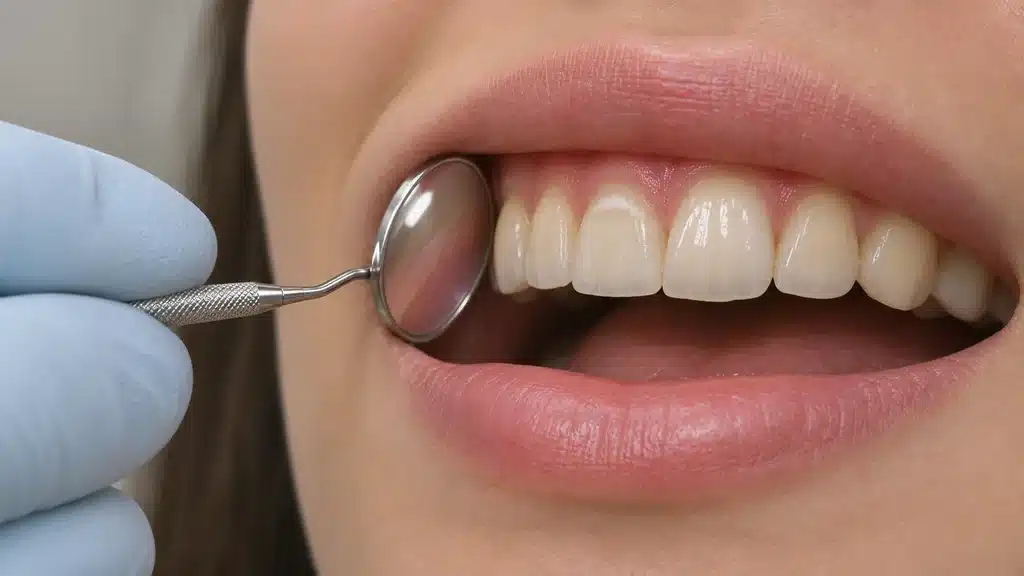
The dentist looks at where the spot sits and whether the enamel has lost its shine or the surface has broken down. Some early changes become clearer once the surface is clean and dry. If the dentist suspects decay where two teeth touch, an X-ray may help them assess its extent alongside the examination.
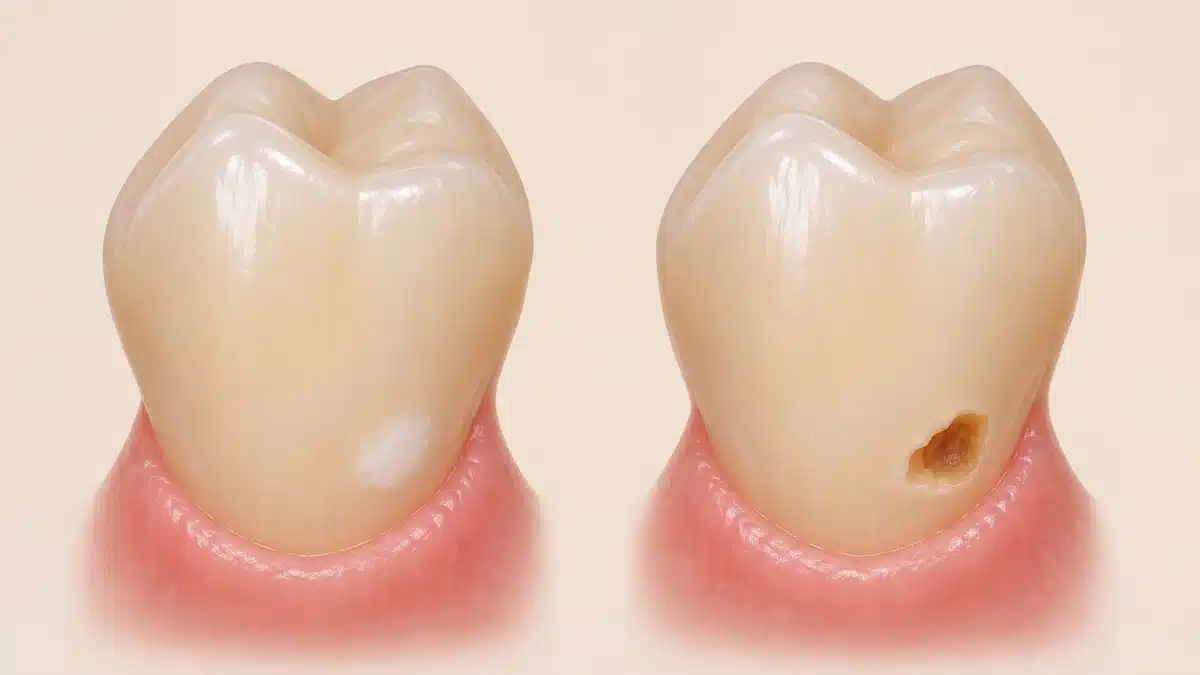
Early Enamel Decay and a Formed Cavity
| What the dentist finds | What may happen next |
|---|---|
| An intact surface with mineral loss | Fluoride and changes to brushing and eating habits can help stop or reverse some early lesions. The dentist may suggest in-office fluoride and a follow-up examination. |
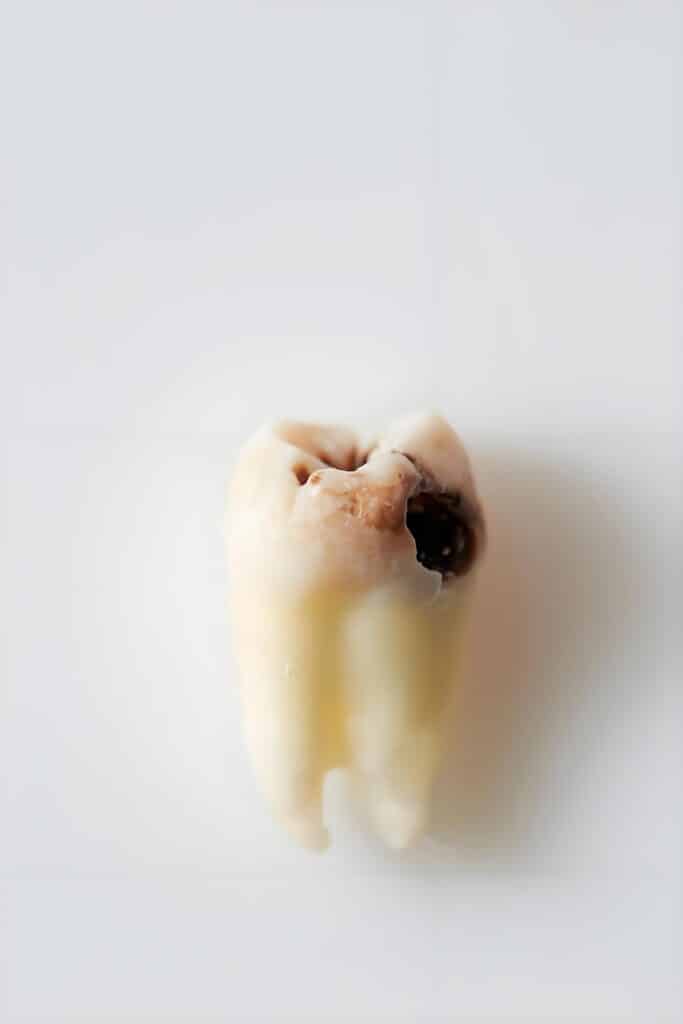
| A break in the surface or a cavity | Home care can help limit further decay. The lost structure cannot grow back. The dentist checks the depth, location and condition of the tooth to decide whether a filling or other treatment is needed. |
At a follow-up visit, the dentist compares the same area with the earlier findings to see whether the spot or the surface has changed. A white mark can still be visible after early decay has stopped progressing. The timing of the next check depends on the findings and your risk of further decay. If a tooth needs repair, see what happens at a filling appointment in Tung Chung. For the later stages and treatment options, see our guide to cavities and tooth decay.
How Fluoride and Daily Care Help
Saliva carries minerals back to the enamel. Fluoride supports this repair process, known as remineralisation. Frequent exposure to sugar gives plaque bacteria repeated opportunities to produce acid, so the timing of snacks and drinks matters as well as the amount of sugar.
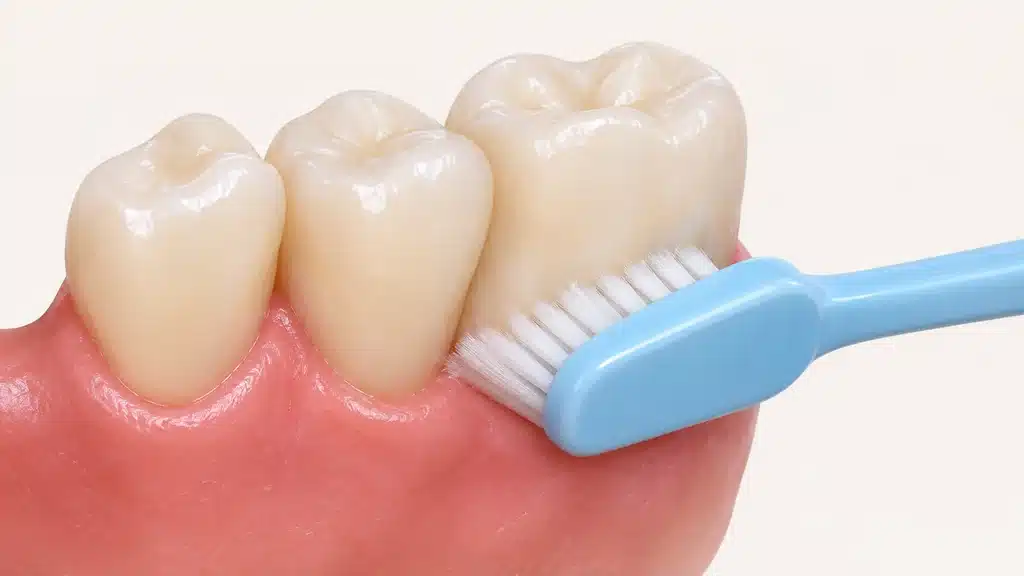
- Brush twice a day with fluoride toothpaste. Take time to clean along the gumline and around the back teeth. Ask the dentist which tool suits the spaces between your teeth.
- Cut down on frequent sugary snacks and drinks. Have sweet drinks with a meal and drink water between meals. Sipping a sugary drink for hours exposes teeth to repeated acid attacks.
- Note when you first saw the mark. Tell the dentist if the area covered by the mark has changed.
What Is the Difference Between Fluoride Toothpaste and a Professional Fluoride Treatment?
Brushing with fluoride toothpaste twice a day helps remove plaque and brings fluoride into contact with the enamel. A dentist considers the location and condition of the tooth surface, along with your risk of decay, before recommending a professional fluoride treatment. Fluoride is applied to the tooth surface to help the enamel regain minerals.
Some back teeth have grooves on their biting surfaces that a toothbrush has trouble reaching. A dentist can assess whether a sealant would help cover those grooves and reduce plaque build-up there.
When to Arrange a Dental Check
If you have noticed a new mark or small hole, request a dental check-up even if the tooth feels fine. Tell the team if food keeps getting caught in one place or the tooth has become sensitive to cold or sweet foods. If pain persists or gets worse, or you notice swelling around a tooth or in the face, contact the emergency dental team promptly.
Noticed a new white spot or a small hole?
A dentist at Bayside Dental Tung Chung can examine the mark and check whether the tooth surface is intact.
Frequently Asked Questions About Early Tooth Decay
Are white spots on teeth tooth decay?
White spots can be a sign of early decay, and they can also reflect changes that happened while the enamel was developing. A dental examination can help identify the cause and whether treatment or monitoring is needed.
What does a stage 1 cavity look like?
Early enamel decay, sometimes called a “stage 1 cavity”, may look like a chalky mark while the tooth surface is still intact. It can also be hidden between teeth. A dentist can check whether the surface has broken down and may recommend an X-ray if needed.
Can white spots in teeth go away?
A spot caused by early decay may fade as the enamel regains minerals and the decay stops. Some marks remain visible. A dentist can assess whether a spot is active or stable.
Can early tooth decay be reversed?
Some early decay can be arrested or reversed while the enamel surface is intact. Fluoride, good plaque control and fewer sugary snacks can help. A formed cavity needs a dental assessment because the missing tooth structure cannot regrow.
Can a cavity heal on its own?
Once a hole has formed, it will not close on its own. The dentist will check how much of the tooth is affected and explain whether it needs a filling or another approach.