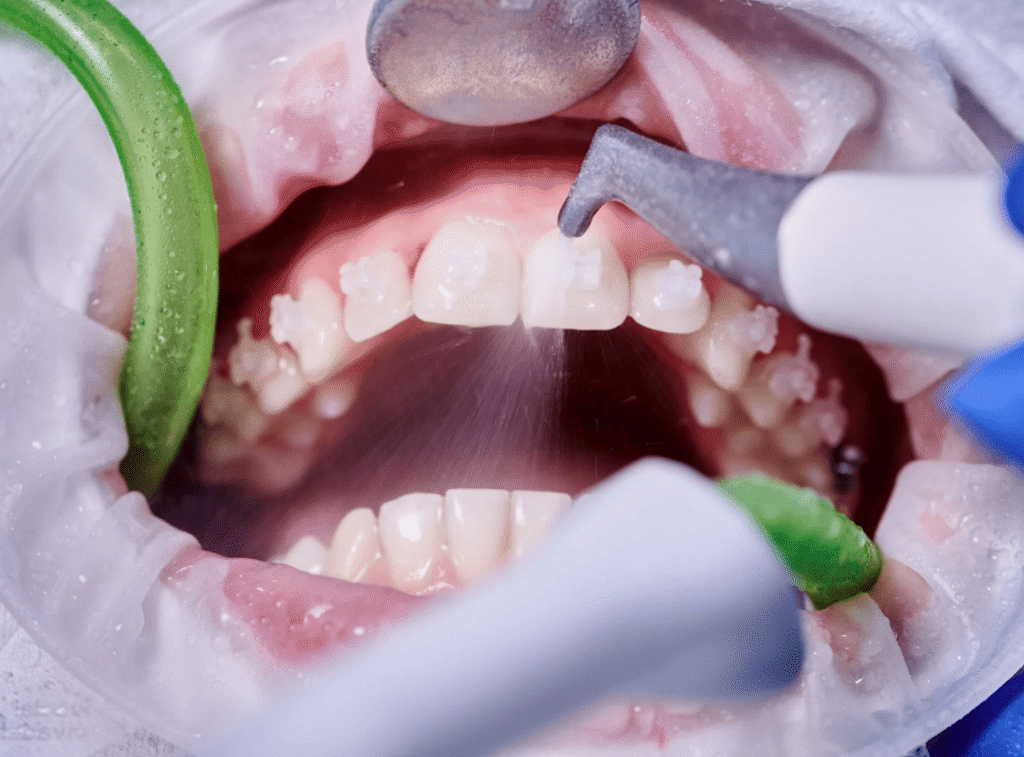
A wisdom tooth infection can cause pain and swelling at the back of your mouth, but pain alone does not confirm an infection. A dentist needs to check the tooth and surrounding gum before choosing treatment. If you have difficulty breathing or swallowing, seek emergency medical care immediately.
Signs of a Wisdom Tooth Infection
Tender, swollen gum behind your last molar can make chewing uncomfortable. You may notice a bad taste, bad breath or discharge from the area. Facial swelling, fever or increasing difficulty opening your mouth need prompt attention. These symptoms can overlap with other dental problems, so a photograph or the location of pain cannot establish the diagnosis.
Gum Swelling and Pericoronitis
Pericoronitis means inflammation of the gum surrounding a tooth crown. It often develops around a wisdom tooth that has only partly emerged. A flap of gum can cover part of the tooth, leaving a space where food and plaque collect.
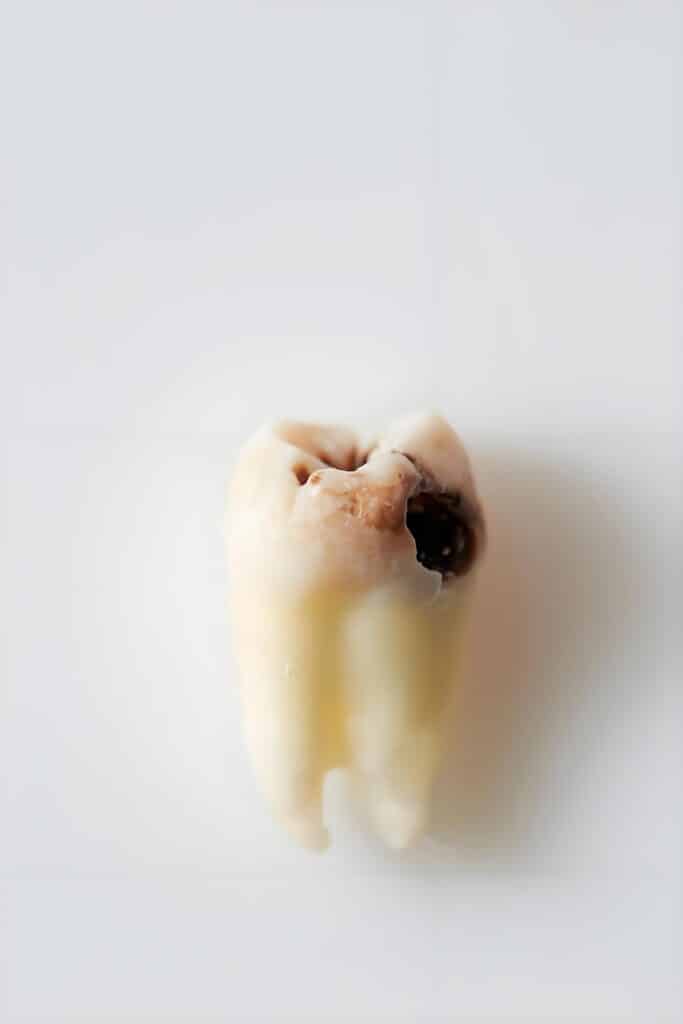
Not every painful wisdom tooth has pericoronitis. Decay in the wisdom tooth or the molar in front of it, and other gum problems, can also cause pain. A collection of pus may be a dental abscess, which needs assessment of its source. If swelling affects other areas of your mouth, our guide to swollen gums explains other possible causes.
Symptoms That Need Urgent Assessment
| What you notice | What to do |
|---|---|
| Local gum pain, a bad taste or repeated discomfort around the same tooth | Contact a dentist promptly, even if the pain comes and goes |
| Fever, facial swelling, pus, worsening pain or the start of restricted mouth opening | Seek an urgent dental assessment that day; if dental care is unavailable, seek urgent medical help |
| Difficulty breathing, speaking or swallowing, swelling under the tongue or in the neck, or marked difficulty opening your mouth | Go to an emergency department immediately; do not wait for an online booking reply |
This is guidance on seeking care, not a diagnostic checklist. An infection can be present without fever. Rapidly worsening symptoms should not be managed by waiting at home.
Why Wisdom Teeth Can Become Infected
Wisdom teeth sit at the back of the mouth, where cleaning can be awkward. When one emerges only partly, the overlying gum flap can trap food debris and plaque. The tissue may become inflamed, and infection can develop. Contact with the opposing tooth can also irritate the swollen gum.
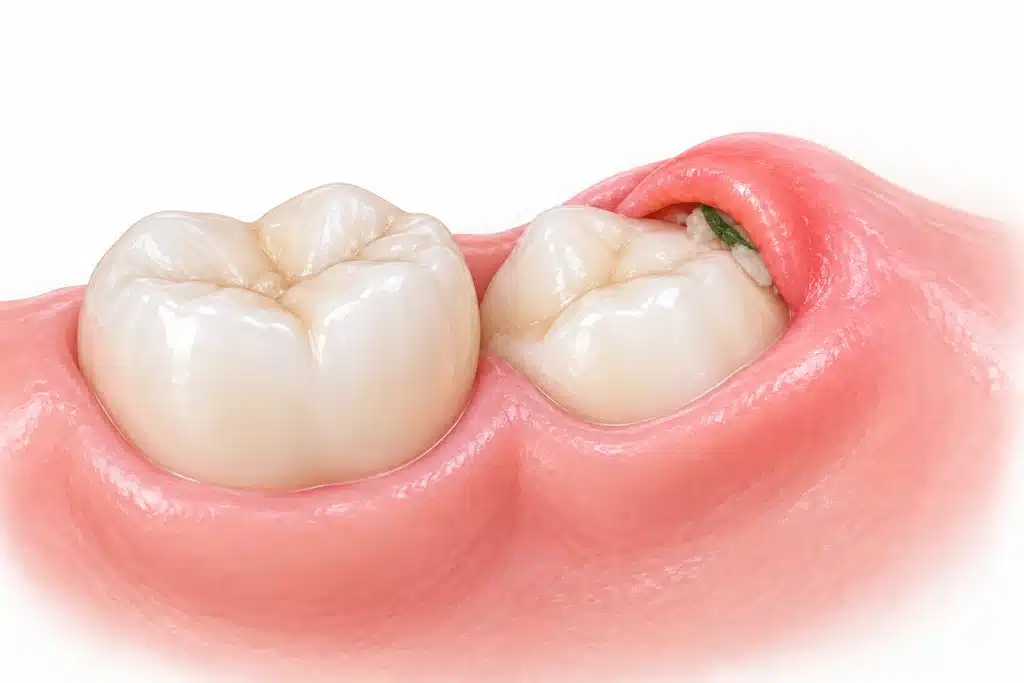
This can happen despite efforts to brush carefully. The position of the tooth and the space available for it to emerge matter as well as daily hygiene. Cleaning may settle an episode, but symptoms can return if the pocket remains. Repeated episodes are a reason to discuss a longer-term plan rather than relying on repeated pain relief.
What a Dentist Checks and How Treatment Is Chosen
While You Are Waiting for Dental Care
If you have arranged an assessment and do not have emergency warning signs, gentle care may help you stay comfortable:
- Keep brushing with a soft toothbrush, taking care around the sore area rather than abandoning cleaning altogether.
- Dissolve half a teaspoon of salt in a glass of warm water. Rinse gently for about 30 seconds and spit it out. Do not swallow it, use hot water or poke sharp objects beneath the gum flap.
- Choose soft foods such as porridge, scrambled eggs or soft noodles. Avoid hard, crunchy foods rubbing against the gum flap. Clean gently after meals instead of digging out food with a toothpick.
- Ask a dentist or pharmacist which pain relief is suitable for you. Follow the instructions rather than increasing doses or combining medicines yourself.
Do not squeeze a swelling, try to drain pus or take leftover antibiotics. Tell the clinician or pharmacist if you are pregnant, have a long-term condition, take other medicines or have drug allergies. These measures can ease symptoms while you wait; they do not replace an examination or remove every possible cause.
Examination and Local Treatment
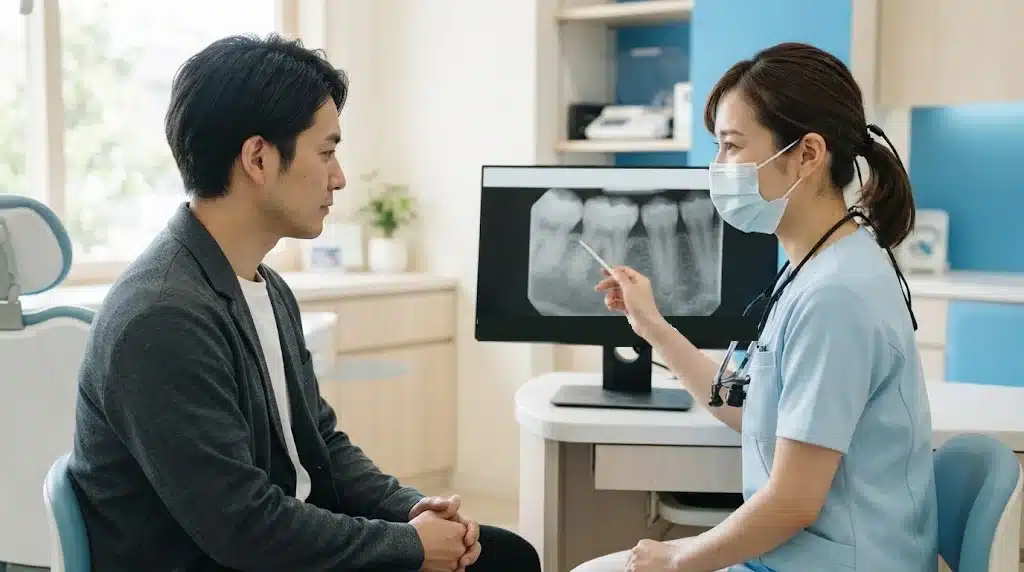
The dentist will examine the wisdom tooth, the gum flap and the neighbouring molar. They may check for decay, discharge, gum disease and irritation from the opposing tooth. Dental X-rays may be needed to assess tooth position and other possible sources of pain.
For pericoronitis, treatment can include gently irrigating beneath the flap and removing trapped debris and plaque. The dentist can show you how to clean the area and arrange a review. Continue this care and attend the review even if the acute symptoms settle. If the examination finds decay or an abscess instead, the treatment plan will address that problem. Similar symptoms do not necessarily call for the same treatment.
Are Antibiotics Always Needed?
No. Localised pericoronitis may be treated with local cleaning and irrigation. A dentist may consider antibiotics when there is spreading infection, fever or other systemic illness, and assess whether referral is needed. Persistent swelling despite local treatment also needs reassessment for possible antibiotics. Antibiotics do not remove the underlying food trap or replace necessary dental treatment. Do not decide that gum swelling alone is a reason to start them.
Does an Infected Wisdom Tooth Need Removing?
How Long Might Treatment Take Before Removal?
With appropriate treatment, pericoronitis usually settles within 1–2 weeks. Mild episodes may improve in a few days, while severe cases can last several weeks. This describes recovery from inflammation, not a guaranteed extraction date or a period to wait before seeking care.
If antibiotics are prescribed, clinical guidance recommends a review around day 3 after starting treatment, or sooner if the patient is particularly unwell. The review checks the response to treatment and helps determine the next step. Follow the prescribing dentist’s instructions; do not stop, extend or change medication yourself.
| Situation after dental assessment | Timing and next step |
|---|---|
| Localised inflammation, adequate mouth opening and suitable treatment conditions, with a reason to remove the tooth | The dentist may assess whether removal is possible at that visit or an early treatment appointment. Antibiotics before extraction are not required in every case |
| An acute episode needing cleaning, irrigation and medication where indicated | Treat first. If antibiotics are prescribed, review around day 3. Inflammation usually settles within 1–2 weeks with treatment; extraction is arranged according to reassessment, not simply because a set number of days has passed |
| Spreading infection, increasing swelling or marked difficulty opening the mouth, swallowing or breathing | Reassess urgently; emergency warning signs require an emergency department. The treating team decides the sequence of drainage, infection control and surgery rather than following the usual recovery estimate |
What Does the Dentist Check Before Scheduling Extraction?
Pain is only one part of the review. The dentist checks whether swelling is subsiding, whether pus or spreading infection remains, and whether you can open your mouth enough for treatment. They also assess whether anaesthesia and surgery can be carried out safely. Root shape and the relationship to the neighbouring tooth and important anatomical structures on X-rays can affect the procedure and the need for referral.
Once symptoms improve, ask the dentist to confirm the next treatment appointment. If they do not improve, further assessment is needed rather than simply taking more medication. The area may need further cleaning, drainage, a reassessment of the source or referral. New fever, enlarging swelling or increasing difficulty swallowing calls for earlier help, even if a review is already booked.
Does a First Episode Mean the Tooth Has to Come Out?
A first, mild episode does not automatically justify extraction. After treating the inflammation, the dentist can assess whether the tooth has room to erupt, whether the area can be kept clean, and whether decay or damage to the neighbouring molar is present. A second or subsequent episode around the same wisdom tooth strengthens the reason to discuss removal. A particularly severe first episode may also warrant a surgical assessment.
Removing the gum flap may be an option if the tooth is suitably positioned and has enough room to emerge. If it remains impacted, lacks space or has other disease, trimming the gum alone may not address the problem. If the tooth is retained, agree a cleaning and follow-up plan rather than relying on repeated medication whenever symptoms return.
Our tooth extraction service explains assessment and treatment. For details of removal, reference fees and recovery, see our wisdom tooth extraction guide.
Preparing for an Appointment in Tung Chung
Note when symptoms began, whether the same area has flared up before, and any changes in swelling, temperature or mouth opening. Bring a list of medicines and explain allergies, health conditions, pregnancy or recent dental treatment. If you have previous dental X-rays, ask whether the clinic would like to see them.

When contacting the clinic, describe swelling and any difficulty swallowing rather than reporting toothache alone. Bayside Dental Tung Chung is in Caribbean Square. Your examination will guide the treatment and follow-up discussion.
Frequently Asked Questions About Wisdom Tooth Infection
How do you know if a wisdom tooth is infected?
Pain, swollen gum, discharge or a persistent bad taste can suggest infection, but they do not confirm it. A dentist checks the tooth and surrounding tissues and may take X-rays. Fever, facial swelling or worsening mouth opening need urgent assessment; breathing or swallowing difficulty needs emergency care.
How long can you go with an infected wisdom tooth?
There is no safe waiting period that applies to everyone. Contact a dentist promptly if you suspect infection, even if pain eases temporarily. Fever, spreading swelling or worsening symptoms need urgent assessment. Do not wait for a routine appointment if you develop difficulty breathing or swallowing.
How to stop a wisdom tooth infection?
Treatment depends on the source. Pericoronitis may need professional cleaning and irrigation, while other causes may need different dental treatment. Antibiotics are not always required and do not replace treatment of the cause. Repeated episodes should prompt a discussion about longer-term options, including whether removal is appropriate.
Can I treat a wisdom tooth infection at home?
Home care can provide temporary relief but cannot reliably diagnose or treat the cause. Gentle cleaning, warm salt-water rinses and appropriate pain relief may help while you arrange care. Do not drain a swelling or take leftover antibiotics. Seek emergency medical care for breathing or swallowing difficulty.
How long does pericoronitis take to settle after treatment?
With appropriate treatment, it usually settles within 1–2 weeks. Mild episodes may improve in a few days, while severe cases can take longer. Contact the dentist if symptoms are not improving or get worse; this estimate is not a reason to postpone assessment or a promise that extraction can take place on a particular day.
Can pain after wisdom tooth removal mean infection?
It can, but pain after extraction can also reflect normal healing or dry socket, which is a different problem. Contact the treating dentist if pain worsens after initially improving, or if you develop pus or fever. The socket needs examination to determine what treatment is appropriate.